Historically, everyone jumped on the ship to SaaS for one simple reason. Once you had built something good, it could scale, and it could scale with very little incremental cost. Whether you were giving your software to one user or to ten users, the price you paid to keep it running was really small. That was the attraction. That's why so many players piled in.
Now, SaaS is going through its evolution. And a lot of that evolution is coming from one place: what users expect these days.
I want to talk about two things that are changing. One is how much SaaS costs to run, and therefore how it gets priced. The other is how people actually use it. Both are messier than they look.
People know how good AI is. And they expect more.
People have now seen how good AI is, and it keeps getting better. I'm not saying the change is happening today. It's not this week, and it may not be this month. But people are expecting a lot more out of products, and a lot more out of how products work, because they've been experiencing newer things everywhere else.
Take something as boring as authentication.
Earlier, what people expected from a login screen was simple. You give your username, you give your password, and you hit sign in. That's it.
Then the small things crept in. People couldn't verify what they'd typed, because there was no show password button. With everyone now managing a whole lot of different passwords and variations of them, people want to see the password they're typing. "Remember me" was there early on itself. Then came Google sign-in, LinkedIn sign-in, Meta sign-in, which are much easier because you're already signed in. You don't even have to get to your keyboard.
And then the latest part: passkeys. Which, honestly, are very tricky to use. I'm not sure how people say that's the future. If you have a whole lot of devices, use multiple browsers, and use a password manager like 1Password or Bitwarden, it gets ridiculous. Some of my passkeys are in Bitwarden, some are on my laptop, some are on my phone, and then there are the passwords I can't remember and the resets that keep happening. I once forgot my Bitwarden master password, and that was a whole big, huge mess. Add browsers that don't support these properly and Chrome's own password manager overriding everything, and I always end up wondering what happens if I lose my laptop or my phone. Just thinking about it is scary.
The password industry is a mess right now. But that rant, we will do later.

The point is this. When we build SaaS today, the expectations from users have grown to a much bigger extent. And people also understand that a lot of these features aren't hard any more. Implementing a social sign-in used to be difficult, and the experience wasn't great either. Right now you can get it done within a few hours, tops. If you're on a framework, it'll have a package for it. On Laravel, I use Socialite. For other kinds of applications I'd probably use WorkOS, which was really good, and whose AuthKit is currently free for up to a million users.
It's not just login. If you're typing something out, people now expect voice dictation to be built in. There is a lot of expectation from users these days, and they expect it to be met in the MVP. Because this is the thing that differentiates your product from something that's half-baked, or something that's AI slop. The attention to detail you put in matters more now than it ever did.
The prototype is the MVP. The prototype is the product.
This also changes how we build MVPs for new products.
Earlier, an MVP didn't even need to be a product. It could be a form. It could be a prototype. At TouchCraft, we've specialised in UI/UX prototypes for years. We'd test them with users, and users were okay with that.
Three years back, we were doing picture mock-ups and clickable UI prototypes. Now, with AI, you have a prototype in, and then you have your product in. It's as simple as that.
And here's the catch. You can't go into a prototype without having the logic behind it any more. If you want X functionality built in, you should know what it's supposed to do, what the input is and what comes out of it. The prototype is the MVP. The prototype is the product. The product is the MVP. That's something that has genuinely changed.
Software is expected to be smarter
The other thing people now expect is for software to be much smarter than it is today.
Almost all the top brands, all the bigger players, have already done some kind of AI integration into their products. It can be as simple as a chatbot, or something like the latest WebMCP, a proposed web standard that lets a website expose structured tools to AI agents (Chrome is trialling it right now). And over the next few years, the expectation is going to move from AI that's bolted on to actual, functional AI that does work.
Swiggy's Instamart is a good example of where this is heading. They've been pulling AI search into the app, where you can ask for something like "plan the ingredients for a chicken dinner for two" and it brings up the ingredients. I don't believe it's popular in usage yet, and I couldn't find any public numbers on it. But Swiggy has also opened up ordering through ChatGPT and Claude since January 2026, and its own example is almost exactly mine: find a recipe, pick the ingredients, add them to your Instamart cart. So the bigger players are clearly betting on it.
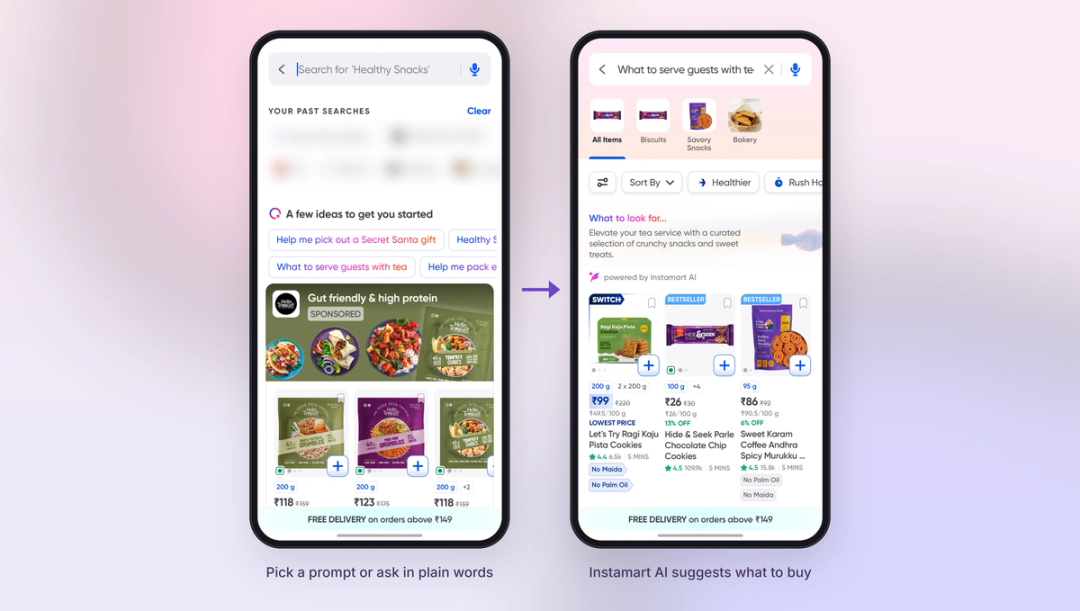
Still, this is what I always say:
The best AI is the one where you never know AI is running behind the scenes.
Google has been doing this for you in search for years. Your social media feeds do it. That isn't chat AI. It's different AI logic that picks things up for you, adjusts the interface for you, and customises it for you. Personalisation has been a trend for a few years now, and it's become a current expectation too. People like it, albeit with a fair fear of privacy issues.
But none of that is what I actually want to get to.
Software isn't scaling the way it used to
What I'm getting to is this: software isn't scaling the way it used to.
Earlier, software was a layer of framework built in. You could replicate the same thing, and when a new user came in, you just had to linearly increase your compute, your storage, your bandwidth and things like that. That's a very small increment in expense. Your cost for every new user was marginal, while the profit each one brought in was very high. That is precisely what attracted everyone to software.
Going into the AI era, a new component has come in. The AI intelligence layer. And this layer doesn't play the same games as before.
The compute required for the intelligence layer is different for each customer, for each new user. If you have AI running, it costs. Based on how a customer uses it, that cost varies too. It's not predictable the way deterministic software was. Deterministic software runs on fixed algorithms and fixed functions. You know how much it takes, you can set limits on it, and as a user you'd know precisely what happens.
AI, on the other hand, differs in quality. It has its own variable limits and variable token systems, and token efficiency differs between models. It's not a simple cost you're incurring.
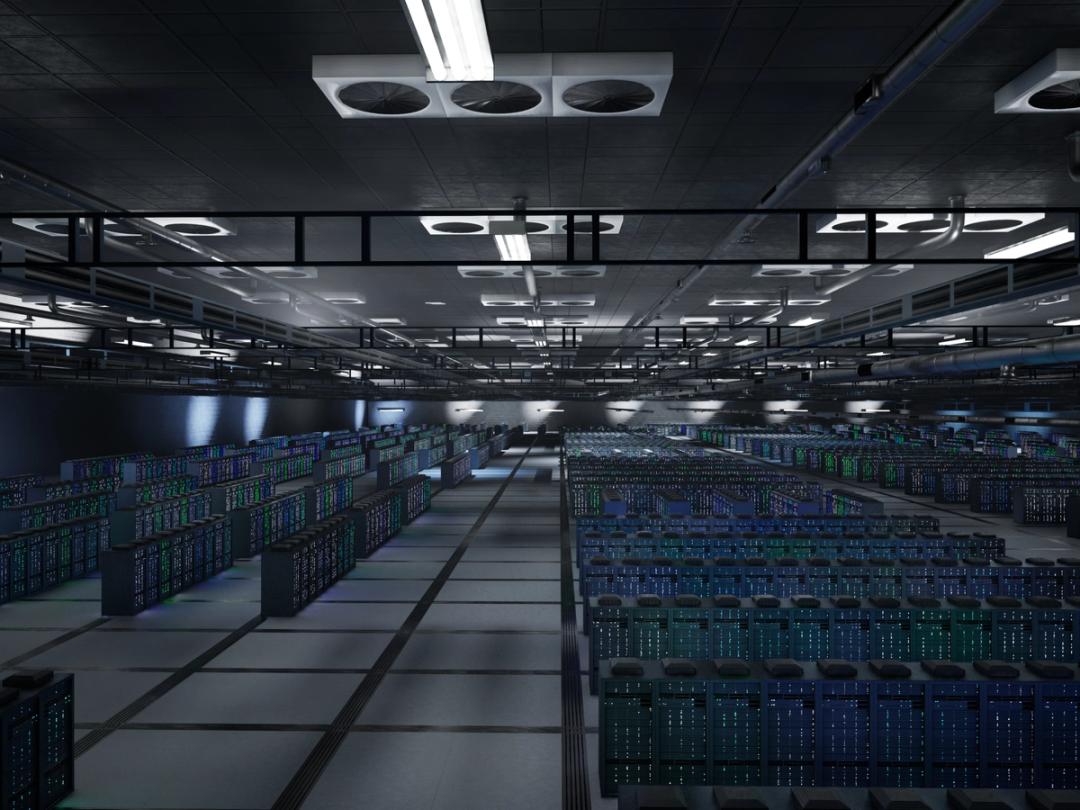
Now, if you've been using AI the way most people do, through chats and maybe some agentic work, you might think the cost isn't too much. What we see is that all of that comes to you as a subsidised cost. The ChatGPT app, Claude on your desktop or phone: what you get out of those plans is heavily subsidised right now.
A SaaS tool doesn't get that. When you build AI into an actual tool, you have to use the APIs. API costs are much higher than this, and they add up. So you're paying, again, for a variable cost.
It used to be a room. Now it's a room and an employee.
Here's how I think about it.
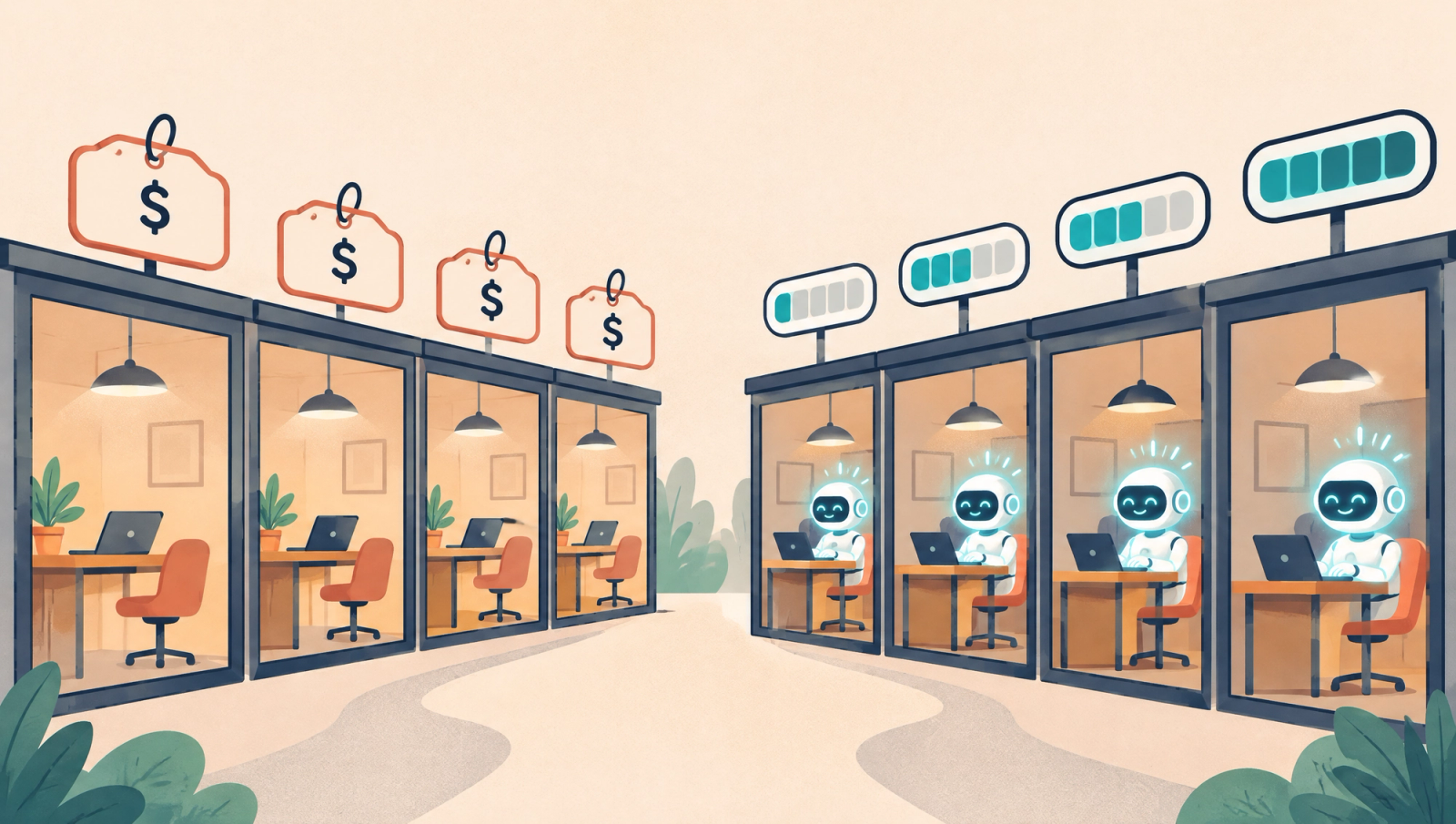
Earlier, when you wanted to onboard a new client into a SaaS, all you had to do was open up a small room. A very small room.
Now, when you onboard a new client into your existing SaaS, you have to open up a small room, and you also have to arrange a seat for an employee in there. That employee is your AI. Some clients will just use the room. Some will barely talk to the employee. And some will find the employee far more useful than the room and keep them busy all day.
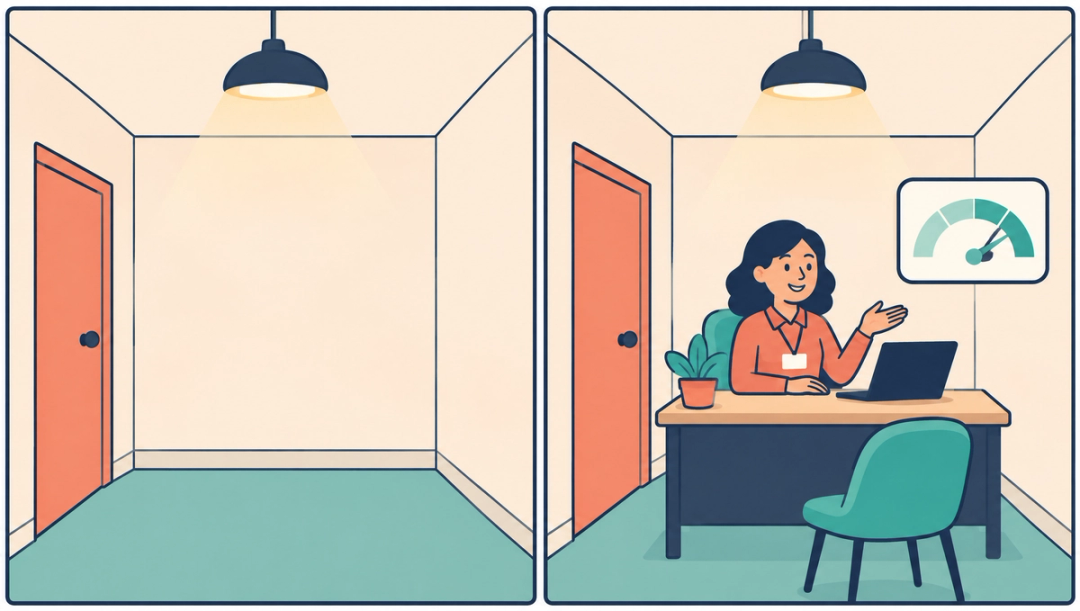
Onboarding a customer used to mean opening a small room. Now you also have to seat an employee in it.
That is not a small cost for companies to bear. A lot of companies try to thwart it by running their own small LLMs and keeping AI to narrow use cases. But things are changing, and people are expecting better intelligence, not a cheaper version of it.
So what does a SaaS cost now?
This is where SaaS pricing becomes tricky. It's not a simple $999 offer, or a simple $499 offer, any longer. There's a lot more to it than that. As someone who's currently building these kinds of tools, it's an increasingly interesting space to learn from.
One thing I can tell you for free: people are not happy when you force credits upon them.
There are tools like Higgsfield, and Magnific, which is an incredible piece of software that we use. Then there's Adobe, and Figma, and Framer, where you pay for the tool and then pay extra for credits. Figma started selling extra AI credits beyond what's in a seat in March 2026. Framer introduced AI credits with Framer 3.0 in June 2026. And honestly, this sucks. It's one of the reasons I don't use Figma any longer. Paying for the tool, then paying for credits on top, just doesn't make sense for me.
In my opinion, Framer got this really wrong. Figma is getting it okay, but it's nowhere near good.
If you were on a Pro plan on Figma, you were expected to have hundreds of projects without worrying, practically unlimited. Now the question in your head is: what am I going to burn this week, and how many credits do I have left? Nobody wants to use software like that.
The big AI companies are fighting the same battle. ChatGPT is the obvious one. I'd assumed most of its users were on Plus, but the real numbers are the other way round. In February 2026, OpenAI said it had 900 million weekly users and 50 million paying subscribers. That means roughly 94% of its weekly users don't pay at all. And here in India, OpenAI made its ChatGPT Go plan free for a year from November 2025, with higher limits on things like image generation.
I'm not sure how they cope with that much compute. It must be a fight every day for OpenAI, against its own users, trying to make sense of its revenue models and bring the burn down. Out of all those users, I'd guess most barely use what they get. It's the heavy few who become the issue.
And it's not just the pure AI companies. Established companies like Apollo and Salesforce are trying to figure this out too. Some of them have figured it out. Some have figured it out and got it absolutely wrong.
What we're trying: an Apple-all-over approach
So, what are we doing about it in our own products?
We're trying to put it together as a bundle, so people don't have to think about it, but still have enough AI compute that all their basic stuff gets done. There's a lot of optimisation happening behind the scenes, so that the customer is never the one who has to bother about which model to use or what kind of setup they need.
It's an Apple-all-over approach. It's a work in progress. We might get it right soon. But I'm convinced this is going to change the software scene. The cost of everything is very high right now, and it's going to stay that way for quite some time. We're in a transition period.
Which also means the pricing of the apps you use today might not stay the same for you, especially now that everyone's expectations are rising.
Then there's MCP. Think of it as APIs on steroids.
Which brings me to MCPs.
I always call MCPs APIs on steroids. You give it tools, and that's APIs plus logic. That's pretty much what an MCP is, at least in the bigger picture. Right now, companies are giving out MCPs so their products can be used inside AI tools and AI harnesses. It's a tricky area, and again, a transitional one.
So it raises a question: what exactly is the value of your SaaS?
Trust me, at the end of the day, your SaaS is what you've built inside it. The way you do things. How Canva does something is different from how Adobe Express does it. Express launched without as many things as Canva, and Adobe kept bringing features in to compete. For common users, the value has largely been the UI. The interface.
Now what happens when an MCP takes the interface away?
My classic example is the Canva MCP. I used it, and it was terrible. So bad that I couldn't create an average-looking poster for anything. Canva has since made its MCP generally available with a newer version, which I haven't tried yet. I probably will.
Then there's Framer. I was using Framer through its MCP, and I thought: why do I even need a Framer account, when I can do the same thing in Claude Code, and it offers me a lot more?
Both Canva and Framer are always restricted by their own systems. If I want to put an image somewhere, or change the dimensions of a creative halfway through, I can't do it in Canva straight away. If I want a specific action to happen in Framer, it depends on what Framer's canvas is capable of. An empty HTML canvas, on the other hand, can do pretty much anything. I can install a plugin on my system and use it.
So how should MCP be treated? In our own projects, we aren't using MCPs for Claude and the likes to connect yet. Where we do use MCPs, it's mostly for administrative and accounting stuff. We're going to be very wary about how we do this. It's a part we still have to figure out from ground zero.
And yes, I see the irony. I'm writing this very blog with Claude Duet, with my image creation MCPs, my posting MCPs and my cross-checking MCPs all connected. That's how we work today.
APIs were never free. MCPs won't be either.
Here's the other thing. APIs are not free.
A few years ago we used Google's Places API to show Google reviews on a page. It would only ever give you up to five reviews for a place, and the calls themselves were billed. That's how APIs have always worked.
Right now, a lot of places where MCPs are used, they're free. They will start costing soon. And that's an added cost coming into your platform if MCPs are doing work for you. (What happens when MCPs become paid is a whole topic on its own. That one gets its own blog.)
Now look at it the other way, where you're the MCP provider. Maybe that's where your income comes from. People make a free account and use your product through your MCP. What you need to give them there is proper intelligence, and proper data.
Because MCPs are functional things. They can do things. Take posting an ad on Facebook. With an API, you make the logic, and you tell it to post. The thinking happens on your side, with your compute. An MCP can do much more. It can connect to Facebook's own intelligence systems and make decisions inside Facebook. There's still compute involved, but it's Facebook's compute. If Facebook does it right, that can obviously be better than us working it all out on our end and pushing it there.
This is where the shift happens.
So, what's actually changing?
Two things.
One: how the cost of SaaS is going to change. The intelligence layer has made every customer a different cost, and pricing will have to catch up without punishing people with credit anxiety.
Two: how people use SaaS might change. But not as much as the hype suggests. People still prefer a UI by a large margin, because it's a much better experience than putting everything down in a chatbot. I really liked the new interactive UI in ChatGPT, which I thought was very good. But I don't want everything in there either.
Sometimes it's easier to go to Swiggy and order. But it's better to use MCPs than go to Sanity and make a blog post.
That's the crux of it. Some jobs want an interface. Some jobs want an agent. And every SaaS company now has to work out which one its customers are paying for, and what it costs to give it to them.
Found this useful? Pass it on.